Price trade credit faster-with sharper risk control on every buyer
Credhive helps trade credit underwriters assess a client’s buyer list, tier buyer risk, flag exceptions, and set premiums and limits with confidence-backed by deep SME coverage and continuous monitoring alerts across the policy term.
Price better. Control exposure. Prevent claims earlier.
Built for trade credit underwriters managing buyer portfolios, pricing decisions, and exposure monitoring across SME-heavy debtor books.
Assess buyer lists faster
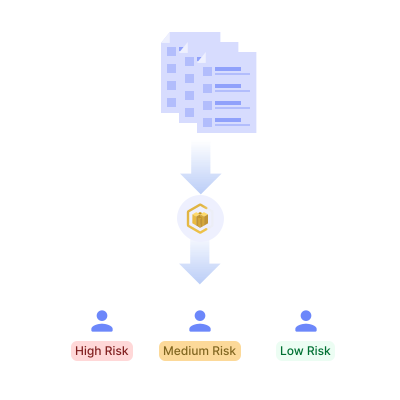
Turn large debtor books into structured buyer risk tiers and exception flags-so underwriters move quickly from review to pricing decisions.
Price risk with better context
Understand payment stress signals, disputes, and network exposure-so premiums, limits, and exclusions reflect actual buyer risk.
Monitor buyers continuously
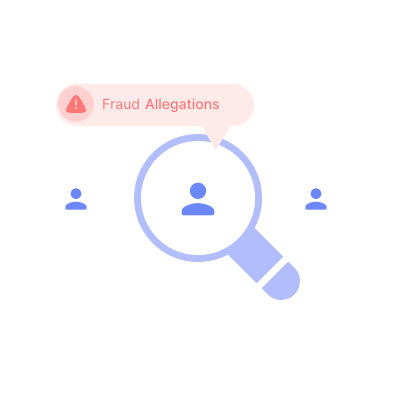
Buyer intelligence stays updated during the policy term, highlighting deterioration signals that require exposure review or underwriting action.
Act before claims emerge
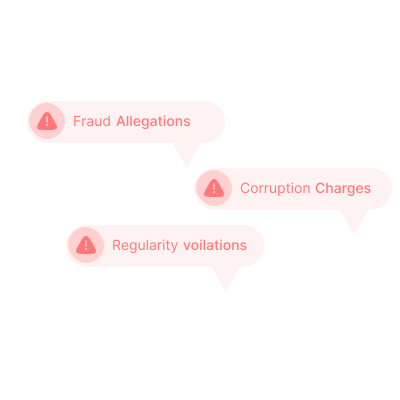
Adverse events trigger early alerts-allowing limit adjustments, tighter terms, or risk controls before losses convert into claims.
Built for trade credit underwriting
Turn buyer lists into risk tiers, exceptions, and exposure actions-then stay ahead with continuous monitoring alerts
Debtor list assessment at scale
Upload or share the debtor book and get a decision-ready view in minutes-buyer risk tiers, key risk cues, and exception flags-so underwriters can move faster from list review to premium and terms discussions.
Underwriting control for premium, limits, and terms
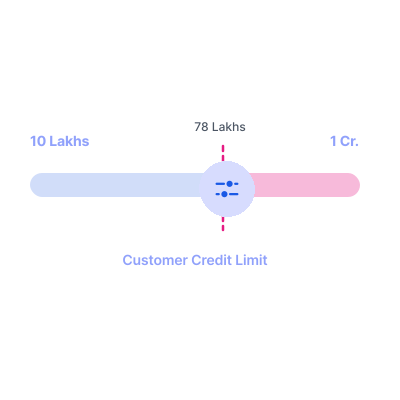
Convert debtor risk signals into consistent underwriting decisions. Credhive provides clear exception context and (in comprehensive programs) recommended limits-so pricing, buyer limits, exclusions, and conditions are applied consistently across accounts and underwriters.
Continuous buyer monitoring during the policy term
Debtor risk changes mid-policy. Credhive keeps the buyer view continuously updated and triggers monitoring alerts when key risk indicators move-so exposure is managed proactively, not only at renewal or after claims start emerging.
Adverse updates that trigger exposure actions
When adverse events emerge, Credhive surfaces actionable alerts-so underwriters can review limits, tighten terms, request enhanced controls, or trigger site visits-helping prevent loss events from converting into claims.
FAQs
Frequently Asked Questions
A Registered BIR is a comprehensive due diligence document built exclusively on statutory data. Unlike reports for unregistered firms, it aggregates official filings from the Ministry of Corporate Affairs (MCA), GSTN, and ROC for Private Limited, Public Limited, and LLP entities to provide a verified 'Source of Truth' for credit and risk assessment.
Traditional reports are often 'snapshots' that become obsolete the moment they are saved. Our product is a Live Data Layer. Instead of a static PDF, you access a dynamic engine that pulls real-time data from government portals, ensuring your risk policy is based on today’s filings, not six-month-old archives.
We provide a 360-degree view by aggregating data from: MCA21 for shareholding, director details, and charges; GSTN for tax filing discipline and turnover trends; Legal/Courts for stage-wise litigation tracking across District, High, and Supreme Courts; Default Lists including RBI Defaulters, SEBI debarred lists, and EPF data.
Yes. Our reports are engineered to meet the stringent KYB (Know Your Business) and PMLA (Prevention of Money Laundering Act) guidelines. They facilitate 'Perpetual KYC' by automatically flagging changes in directorship, shareholding, or legal status, helping BFSI institutions stay audit-ready.
Absolutely. Our product is built as a DaaS (Data as a Service) platform. You can access reports via our secure web portal or integrate our REST APIs directly into your Loan Origination System (LOS), ERP, or internal risk models for automated decisioning.
Yes. Using our Dynamic Report Architect, you can select from over 100+ data variables to build a format that matches your specific credit policy. You can remove irrelevant noise and standardize templates for your entire organization to ensure consistent risk evaluation.